 Skip to content
13 September 2026
The start of the 2026–2027 academic year at IS33 marks a significant milestone: how many pupils are there, where do they come from, how are the first few days going for those arriving from abroad, and what is changing this year at International School 33?.

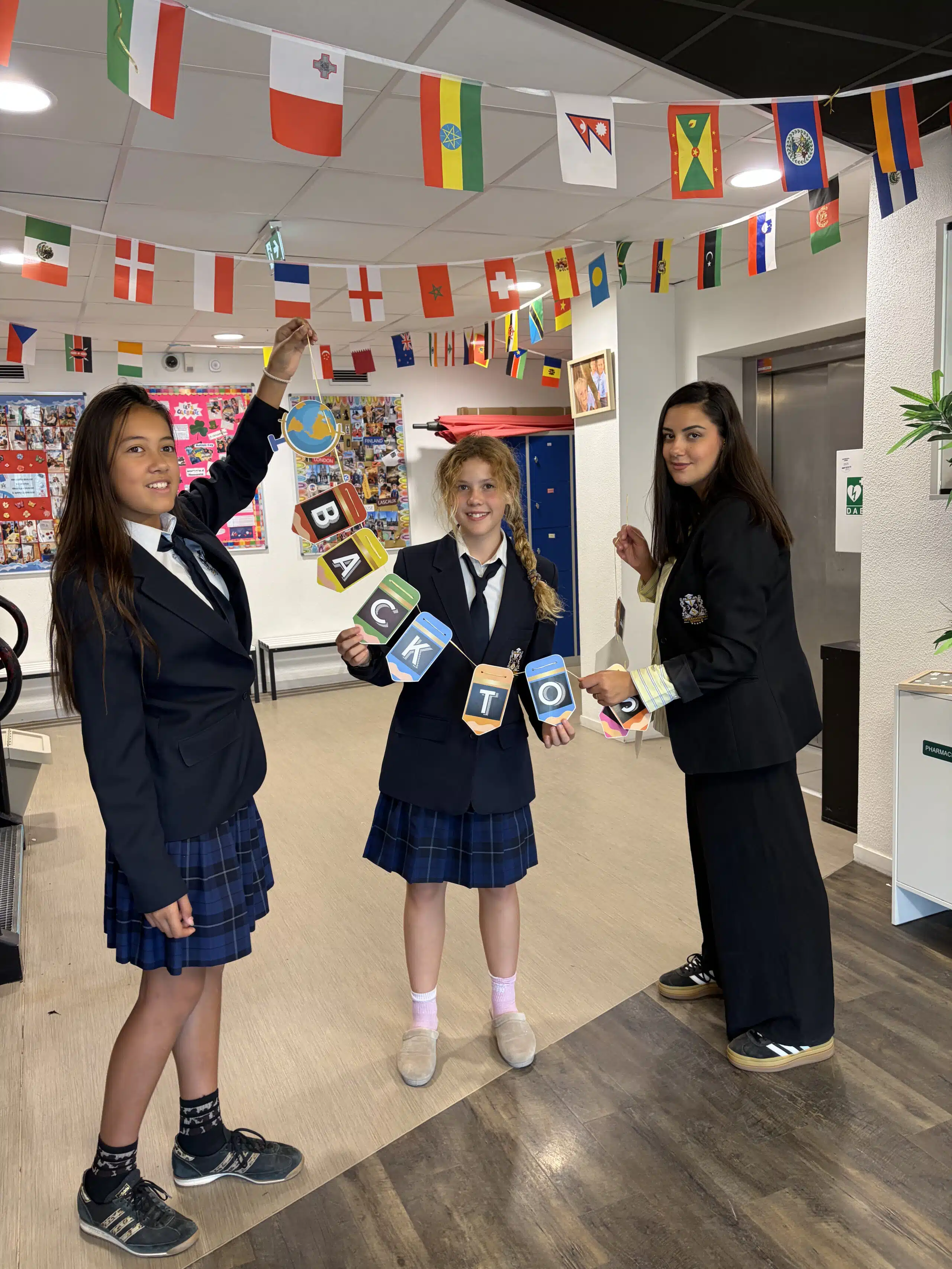
International School 33 is hosting this year 237 pupils, taken from more than twenty different nationalities. The school offers daily lessons in French and English, as well as Spanish and Chinese as optional subjects.
This new academic year has seen the arrival of 75 new families. These include families who speak English, German, Portuguese, French, Persian, Polish, Spanish, Arabic, Chinese, Japanese and Hungarian – reflecting the cultural diversity that has characterised IS33 since its foundation.
For pupils arriving from abroad, the start of the school year is the same as for pupils already enrolled at the school. However, the teachers provide them with more personalised support, in particular by finding a common language to facilitate initial communication.
This is the case with Benoît (name changed), who joined IS33 this year. He speaks Japanese and has a basic knowledge of English: he therefore communicates with his teacher in English. Where this helps to put the pupil at ease, the teaching team also involves a classmate who speaks the same language. When no common language is available, communication takes place through gestures, pictures and other visual aids.
Every new pupil takes a placement test so that they can be offered work suited to their abilities. It is not uncommon, particularly in primary school, to welcome pupils who are fully bilingual or native English speakers: a Year 6 pupil may therefore follow the English curriculum appropriate to their Year 6 level, whilst studying French at Year 1 level, whilst they gradually acquire the basics. Pupils who do not speak French or who are just beginning to learn the language are enrolled in FLE (French as a Foreign Language), whilst joining their class straight away.


Many families who move abroad find out about their posting in July, or sometimes even in September. At IS33, pupils joining mid-year are a common occurrence: it is not unusual for a class to start the year with 15 pupils and end it with 20.
As the 2026–2027 school year gets underway, the vast majority of year groups still have places available for new pupils. This maximum class size of 20 pupils is a voluntary limit, which helps to ensure good learning conditions and enables teachers to cater to the pace and needs of each child – a principle that forms part of pedagogy specific to IS33.
As the number of places available changes throughout the year, we would like to invite you to contact the Admissions team to check current availability, level by level.
In terms of teaching staff, IS33 is welcoming two new teachers this term: Jedaiah Bates, in charge of combined sciences, and Laetitia Corinus, who is joining the team as a teacher of French as a foreign language.
As regards the International Baccalaureate, the start of the new academic year marks an important milestone with the launch of the Career-Oriented Programme (POP), the fourth and final programme in the IB continuum awarded to IS33 in July 2026 – making IS33 the first and only school in France to offer all four programmes in the continuum. A first cohort of four pupils is introducing this new course from this year onwards.
The growth in pupil numbers has also led to the opening of new classes and new year groups, as well as new teaching initiatives focused on interdisciplinary learning, supported by the modernisation of the school’s scientific and digital facilities.

As the Class of 2026 embarks on a new chapter, IS33 is proud to celebrate both its International Baccalaureate results and its pupils’ university places.
100 % pupils who received support through the school’s university guidance programme secured a place at one of their first-choice universities – and all offers were confirmed following the publication of the final International Baccalaureate results.
Pupils at IS33 achieved a pass rate of 91 % the International Baccalaureate Diploma. They have been accepted into prestigious institutions in France and around the world, including McGill University, the'Paris Dauphine-PSL University (London campus), Sorbonne University, the'University of Manchester, the'University of Arizona, Bishop's University, the'Bordeaux Montaigne University and KEDGE Business School, amongst other things.
For this first term as head of the school, the welcome from families and teachers was particularly warm. The level of commitment shown by the entire teaching team came as a very pleasant surprise: a start to the academic year that the management team regards as a genuine collective success. A success that confirms, once again, IS33’s position as international school in Bordeaux reference.

How many pupils will International School 33 have in the 2026–2027 academic year?
IS33 has 237 pupils this year, representing more than twenty different nationalities, from nursery school to the final year of secondary school.
Is it still possible to enrol your child at IS33 during the school year?
Yes. It is common for pupils to join IS33 during the school year: it is not unusual for a class to start the year with 15 pupils and end it with 20. As the 2026–2027 school year begins, the vast majority of year groups still have places available for new pupils.
How does the integration of a child who does not speak French work at IS33?
The child joins their class straight away and follows the curriculum alongside the other pupils. They receive personalised support from their teacher, who seeks to find a common language, draws on a classmate who speaks the same language where necessary, and adapts the work to the child’s level. Non-French-speaking pupils or beginners attend FLE (French as a Foreign Language) lessons alongside their regular classes.
What is the maximum number of pupils per class at IS33?
Class sizes are limited to a maximum of 20 pupils, in order to ensure a good learning environment and individualised support tailored to each child’s pace.
What were the International Baccalaureate results at IS33 in 2026?
The IS33 Class of 2026 achieved a pass rate of 91 per cent in the International Baccalaureate, with 100 per cent of pupils supported by the university guidance programme gaining a place at one of their first-choice institutions, including McGill University, Sorbonne Université and the University of Manchester.
What is the Career Guidance Programme (POP) launched this year at IS33?
The POP is the fourth and final programme in the IB continuum, which IS33 will be awarded in July 2026. This makes IS33 the first and only school in France to offer all four programmes in the IB continuum. A first cohort of four pupils will join the programme at the start of the 2026–2027 academic year.
Your child can join IS33 during the school year, without having to sit an entrance exam.
Find out about admissions to IS33 Français Français
 English (UK)