
 Skip to content
An international kindergarten based on Montessori teaching methods. Bilingual English-French immersion from an early age, in a friendly environment in Bordeaux Métropole (Gradignan).
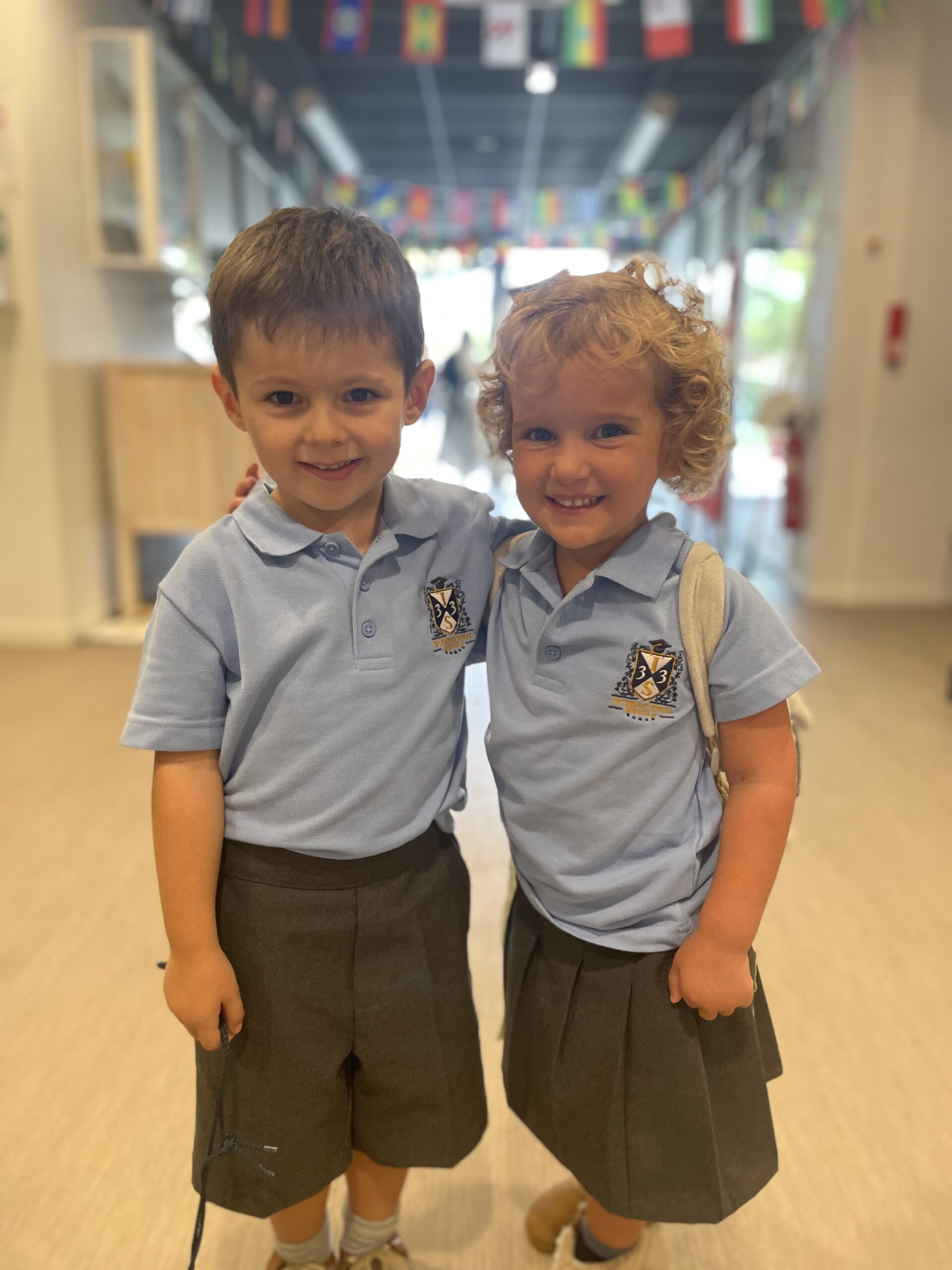
A bilingual Montessori environment where each child develops their autonomy, confidence and natural curiosity
At our bilingual kindergarten just outside Bordeaux, children study two days a week in French and two days in English. Each teacher speaks exclusively in their mother tongue, promoting a natural and effective immersion.
Are you thinking of enrolling in an international kindergarten in Bordeaux? Find out more on our please visit our international school admissions page in Bordeaux. and talk to our team.
Learning several languages from an early age, It enriches the child's cognitive structure, reinforces mental flexibility, develops memory and concentration skills, and makes it easier for the child to learn other languages in the future.
Thanks to this daily immersion from kindergarten school onwards, children acquire a natural, accent-free pronunciation in both languages.
They become able to think, reason, play and learn in both French and English.
Their brains develop metacognitive skills that help them to understand, analyse and manage several language systems.


IB International Programme (PYP) & Montessori pedagogy
Language, maths, culture & science, practical and sensory life, according to the principles of the IB international programmes and Montessori pedagogy. Each child progresses at his or her own pace with the native teacher of the day.
Stories, rhymes, oral exchanges and discoveries linked to the IB theme of the moment. Development of vocabulary and self-confidence.
A pupil in charge of the snack bar: autonomy, politeness and social rituals.
Free play in the dedicated playground, with a jungle gym-type motor structure.
Continued work in language, mathematics, culture & science, practical life and sensory skills, in line with IB and Montessori principles.
Lunch, followed by playtime or naptime, depending on each child's needs.
Work in the same areas (language, maths, culture & science, practical and sensory life) with artistic or scientific projects linked to the IB theme, in the language of the day.
Tidying up, a quiet activity (reading, storytelling) then the pupils leave or go to the daycare.
Daycare from 8am in the morning to 6.30pm at the end of the day.
The child is taught as a whole: well in body, well in mind, well with others.
Weekly sport and motor skills classes + judo every week from age 4 for everyone. Development of coordination and physical well-being.
Weekly art and music sessions. Two singing and/or dancing performances per school year. Piano and guitar offered as extra-curricular activities.
Spanish and Chinese.
Pupils grow their own crops, understand the rhythm of nature and develop respect for the planet.
At International School 33, Montessori pedagogy and the principles of the International Baccalaureate (IB) combine perfectly to meet the profound needs of young children: to understand, explore, create and marvel. Both approaches place children at the centre of their learning, respecting their natural rhythms and promoting their autonomy from an early age.
In our bilingual nursery classes, children enthusiastically develop essential early skills: the joyful acquisition of reading, a concrete and lively understanding of mathematics, a general culture nourished by projects open to the world, and a rich vocabulary in two languages. Thanks to a prepared, structured and stimulating environment, they develop their ability to concentrate, their self-confidence, their taste for effort and their pleasure in learning. School becomes a real place of fulfilment, discovery and daily wonder.Consult our Bordeaux international school price list to estimate tuition fees based on your situation.
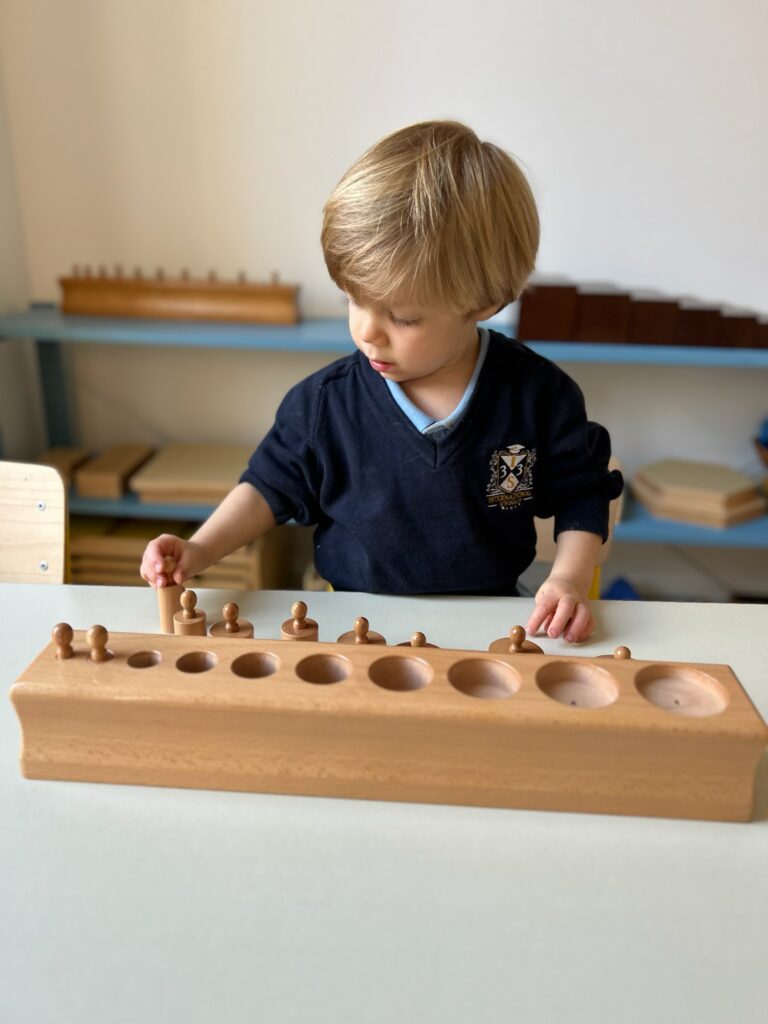

Each day, the children are free to choose their work from among the major Montessori areas. This autonomy develops concentration, confidence and a passion for learning.
Everyday exercises to develop fine motor skills and concentration, independence and preparation for writing.
Refine your five senses to better understand and appreciate the world around you.
Sensory manipulation of numbers up to 9999, mastery of the 4 operations and discovering geometry.
Enrichment of vocabulary in French and English, learning to read, writing and basic grammar.
Exciting discoveries: animals, plants, volcanoes, dinosaurs, geography, the solar system. The world opens up to curious children.
At International School 33, every effort is made to encourage children's overall development: social, emotional, physical and cognitive. The prepared and adapted environment allows each child to grow at his or her own pace.

A solid foundation for a confident entry into the world of higher education’international primary schools
Answers to the questions parents ask themselves before enrolling their child in an international kindergarten in Bordeaux.
Do you have a question about nursery school or Montessori teaching?
Talk to the admissions team Français Français Français
 English (UK) Français Français Français English (UK)